
By the time you’ve diagnosed the root cause, reset expectations, and corrected the internal misalignment, the immediate crisis is usually over. The unrealistic date has been addressed. The team is aligned. The system is steadier. Operationally, things are back on track.
But even when the mechanics are fixed, something still lingers, and most leaders know it. They can feel the shift in tone from clients, the hesitation from sales, or the quiet frustration inside their own teams. It’s not that leaders don’t recognize the relational impact. It’s that they’re already pulled into the next priority, and the work of rebuilding trust often gets left to the team to manage on their own.
The problem is: trust doesn’t rebuild itself.
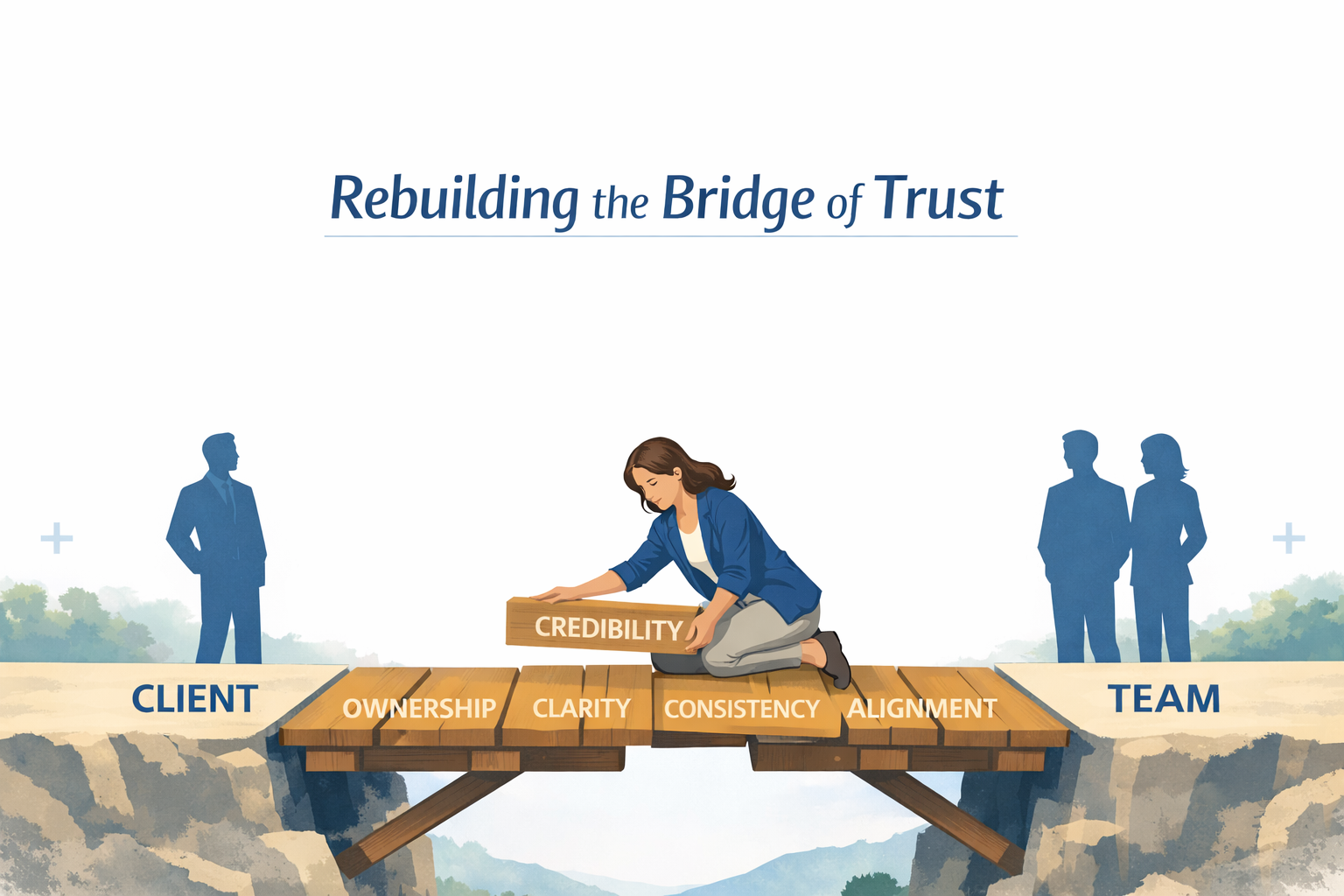
Correcting the date solves the operational issue. Rebuilding credibility solves the relationship—and that requires intention.
Part 2 focuses on that second piece: how to repair the relational strain that remains after an unrealistic date has already been shared, and how to strengthen the partnership going forward.
Rebuilding Credibility
Blog post: In defense of the em dash.
Once the immediate issue is resolved and expectations have been reset, the focus shifts from stabilizing the system to strengthening the relationship. Most leaders recognize that an over‑promise leaves a mark—not because the team failed, but because the client was put in a position where they had to absorb uncertainty they didn’t create.
The challenge isn’t awareness, it’s capacity.
Leaders intend to reinforce the relationship’s importance, but the next priority arrives quickly: another launch, the next escalation, another internal demand. And in that gap, the responsibility for rebuilding trust defaults to the team. The same team that unintentionally created the strain in the first place. That’s not fair to them, and it’s not effective for the client.
This is where leadership presence matters most.
Rebuilding credibility isn’t about revisiting what went wrong. It’s about showing (through clarity, steadiness, and follow‑through) that the client is valued, supported, and seen as a long-term partner rather than a transactional customer. It’s the difference between “we fixed the issue” and “we’re invested in you”.
This is the work that deepens long-term ties and what turns a corrected timeline into a strengthened relationship.
Taking Ownership Without Taking Blame
When trust has taken a hit, stop trying to clarify who said what, why the date was shared, or how the misalignment happened. Your client doesn’t care about the internal play‑by‑play. What matters is how you show up now—with steadiness, ownership, and a clear path forward.
Ownership here isn’t about admitting fault. It’s about signaling that someone senior is re‑anchoring the relationship and ensuring the client feels supported, not left to navigate the aftermath on their own. It’s the difference between a team scrambling to recover and a leader stepping in to restore confidence.
Effective ownership sounds like:
- “We want to make sure you have a timeline you can plan around.”
- “We’ve aligned internally and are committed to giving you accurate, reliable updates.”
- “Here’s how we’re moving forward to ensure you have what you need.”
No defensiveness. No explanations. No shifting responsibility. Just clarity, commitment, and forward motion.
When leaders take ownership this way, three things happen immediately:
- the team no longer owns the relationship repair
- the client feels valued rather than transactional, and
- the partnership resets on steadier ground
This is the first step in rebuilding credibility. Not rewriting the past, but demonstrating that the future will be handled with clarity and care.
Communicating Revised Timelines With Confidence
Once you’ve taken ownership, the next step is communicating the revised timeline in a way that restores confidence rather than erodes it further. This is where many teams unintentionally make things worse. Not because the new date is wrong, but because the delivery of that date feels hesitant, overly apologetic, or overly technical.
Clients don’t need to know your internal process. They need clarity, confidence, and a sense that the path forward is solid.
A confident timeline reset:
- Explains the change without over-explaining the mistake. A simple, steady framing is enough. “We’ve completed the full assessment and want to give you a timeline you can rely on.”
- Shows the rigor behind the new date. Not the entire work breakdown, but enough to signal that the date is grounded, not aspirational. “This reflects the full scope, dependencies, and resources required.”
- Reinforces alignment. Clients want to know the left hand and right hand are talking. “The full team is aligned on this plan and committed to delivering against it.”
When leaders communicate revised timelines this way, clients stop wondering whether the new date is “real” and start focusing on how to move forward with you. It shifts the conversation from uncertainty to partnership—exactly where you want it to be.
Rebuilding Trust Without Over-Correcting
Now that you’ve communicated the revised timeline and committed to clearer, more predictable updates, the next step is ensuring your team follows through with a disciplined process. This consistency shows the client that the revision wasn’t a one-time correction, but a more intentional and reliable way of working together going forward.
Rebuilding trust is about doing what you say you’ll do—and only saying what you can stand behind.
Culture Reinforcement
Making Accuracy the New Normal
Rebuilding credibility with a client is important. But the deeper work is making sure your team doesn’t end up in the same situation again. A single corrected timeline can repair a moment. A culture of accuracy prevents the pattern.
This isn’t about adding more process or slowing the team down. It’s about creating an environment where people feel supported in giving realistic estimates, raising risks early, and asking for clarity before committing. When teams know that accuracy is valued more than speed or appeasement, the quality of their commitments changes. So does the quality of the client relationship.
Clients notice when a team becomes more predictable. They feel the difference when updates are steady, when commitments are grounded, and when communication is proactive rather than reactive. Over time, this consistency becomes part of your reputation. Not because you never hit a bump, but because you handle every interaction with clarity and discipline.
This is how trust becomes durable. This is how relationships deepen. This is how your team becomes the partner clients rely on, not just the vendor they work with.
Part 1 was about recognizing the root cause behind the over-promise and beginning the internal and external reset.
Part 2 is about strengthening the relationship after an over‑promise.
Part 3 will shift the focus to building the internal habits, systems, and leadership behaviors that make accuracy the default—not the exception.
Closing Thought
Strong leadership isn’t defined by flawless execution—it’s defined by how you show up when trust needs to be rebuilt. Clients remember steadiness, clarity, and follow‑through far more than the misstep that came before it.
If you or your team needs support strengthening client relationships, improving cross‑functional alignment, or building the communication habits that create long‑term trust, CLSC can help—through training, facilitation, or fractional product leadership.